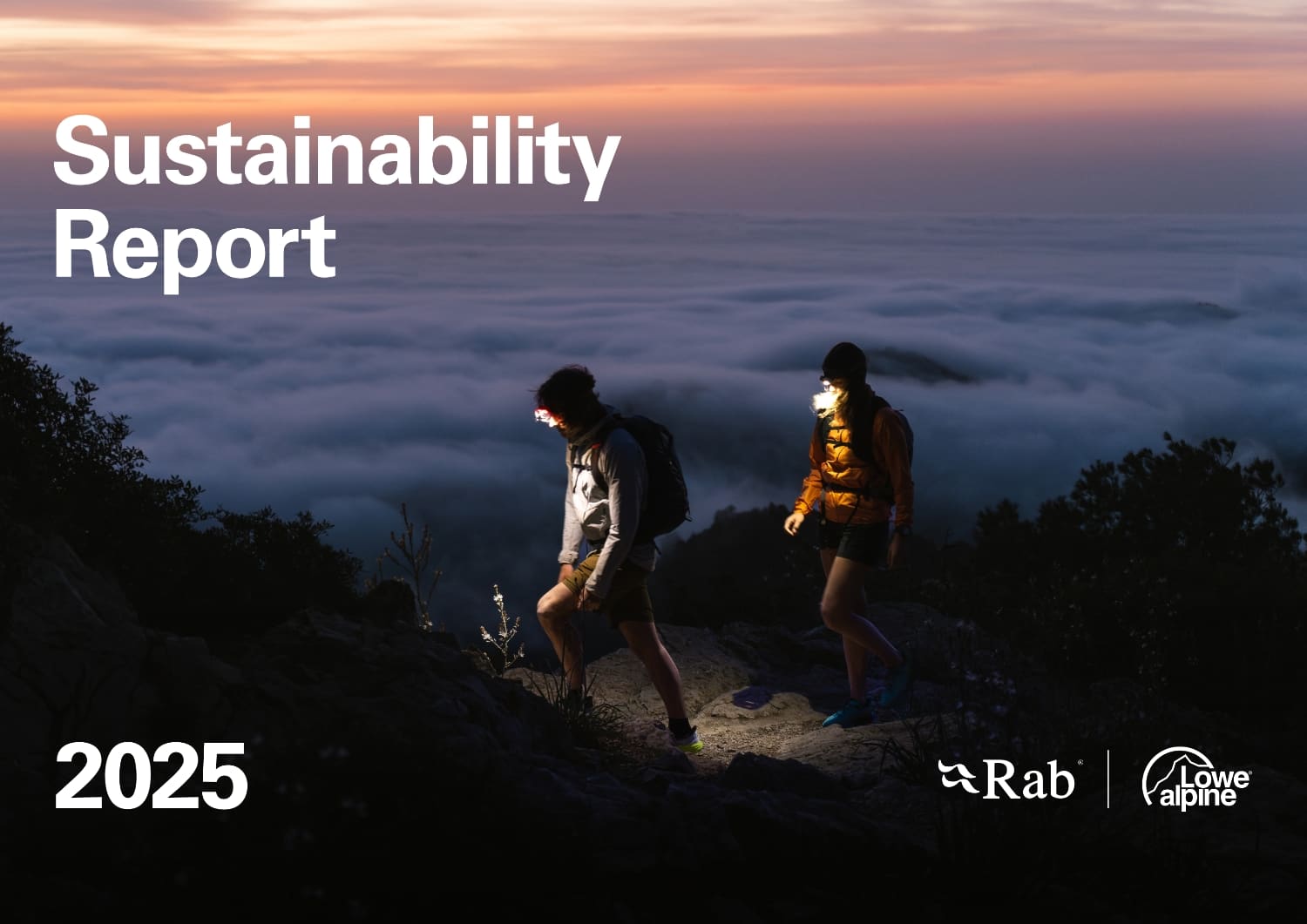
Rab 2025 Sustainability Report Review
Rab’s sustainability report is widely hailed as a market leader for its transparency and comprehensive approach. As a long time wearer of a Rab insulated jacket, I was keen to find out more about the work that goes on behind their products.
Three things I like:
1 – Good transparency
Particularly around their GHG emissions, with an explainer as to why their emissions intensity has increased. Many companies treat their sustainability report as a PR exercise, reluctant to admit when things don’t go according to plan. This doesn’t do them any favours though. Transparency builds trust. By being honest about their shortcomings and explaining the reasons behind the increase, they show good knowledge and awareness of the issue.
2 – Their non-GHG environmental strategy
New this year, Rab has published a broader range of environmental data including energy use, water and recycled water used, wastewater generated and percentage of mills that limit adverse impacts in the supply chain. It’s not perfect, as it could do with a little more explanation so the reader can fully understand what they’re looking at, but it’s a great step in the right direction since greenhouse gases are just one part of the puzzle.
3 – Their people section
This was where the report really came to life for me, and where we could see the impact of their work. It showcased how they are helping get more people into the outdoors through various initiatives. The smiling faces and quotes show what a wonderful difference their work has made.
Three things I’d like to see more of next time:
1 – More context
This was a report about the 12 months in question, and, apart from the section on GHG reduction, didn’t give much context in terms of the longer sustainability journey they are on. There are several examples, but one that jumped out was the data point “In 2024 62% of purchased down was recycled”. This sounds great, but I’m left wondering whether they are on track, ahead, or behind, and whether their target is 100% and if so, by when? Another example relates to their repair and rental stats. I wonder how many garments they repair vs how many new items they sell in a given year and the same with rental. Can they estimate how many new purchases are being offset by these services and show how that is increasing?
2 – More evidence of impact
As with many sustainability reports, Rab devotes a lot of the report to what they’ve been doing (which is a lot to be fair) without talking about the impact of their activities. This is particularly obvious in the Partner section of the report where they share the ways they are doing business responsibly through close working ties with their manufacturing partners in Asia. Next year, it would be great to read more stories, quotes and case studies of how their programmes are actually making a difference. When I work with clients, I refer to this as ‘show me [the difference you’re making], don’t just tell me [what you’re doing]’.
3 – More transparency
Whilst this report covers a broad range of subjects the company is working on and transparently shares emissions data, I feel it could go further. I’d love to see Rab share all their targets across the different workstreams and their progress against them, highlighting where they are facing particular challenges and their ideas for overcoming them. There’s one lovely success story in this report about how they are working to get solar panels installed on the factories they work with. Finding there was a restriction in place at a factory in China, they wrote to the regulator which resulted in the restriction being lifted and the installation going ahead.
A few other notes
Just in case anyone from Rab is reading this, I noted a glaring typo on page 21 – 7.1kg tCO2e per item manufactured – it’s either 7.1kgs or 7.1 tonnes. I hope it’s the former!
Not all the jargon and initials are explained. I had to look up a few things like ‘mulesing-free’ and whilst I knew certain initialisations thanks to working in the sustainability arena, I’m not sure their average reader would.
I loved the “There’s no such thing as free returns” section and the fact Rab donates some of the money generated from returns to environmental and charity partners.
For anyone wanting to read the report you can get stuck in here.