Mammut Responsibility Report Review
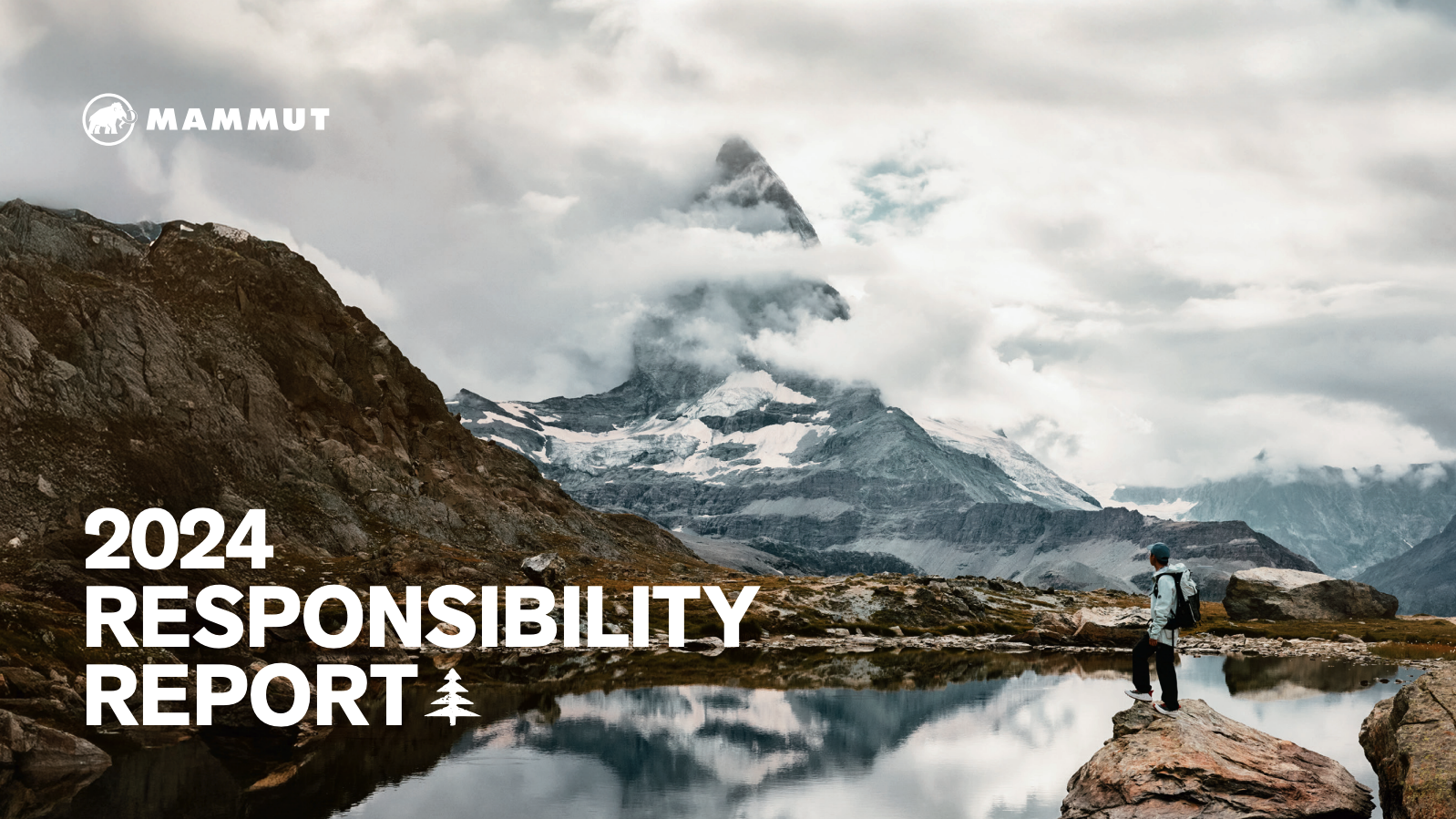
Mammut is an apparel and equipment manufacturer for mountain sports. It began life in Switzerland in 1862 as a rope-maker and prides itself on sticking to its mountain roots, refusing to become a streetwear brand. As a mountain dweller myself, I was intrigued to dive into their responsibility report.
Three things I like:
1 – Comprehensive
This is a very comprehensive responsibility report. It covers everything you would expect under the banner of social and environmental impact such as community projects, carbon footprint, resource usage, ethical production and circularity. It’s a long report, but everything in its pages merits being there. I particularly appreciated the attention they have given to educating the reader about the partners they work with and the issues they are addressing.
2 – Great explanations
Mammut’s explanation of their Net Zero target, near term carbon reduction goals and clear carbon removal policy are excellent. They are understandable, concise and, in the case of carbon removal vs avoidance, use graphics to illustrate the point perfectly. I would love to see more reports show this level of clarity.
3 – Provides context
Where other reports can feel like a real snapshot of the year in question, this report provided real context. The authors did this by sharing target figures together three year’s worth of data where possible to demonstrate progress (or not) against those targets.
Three things I’d like to see more of next time:
1 – Impact!
This report contained a lot of information about the action Mammut is taking. As I was reading I was nodding along, thinking how great it all was until I realised they hadn’t shared the impact of many of those actions. An example of this is in the community engagement section where they report the support they’ve provided to organisations like ClimbAID, Paradox Sport and others, but don’t share what the impact of this was on the recipients. Some quotes from the beneficiaries of their support would really bring this to life. The same goes for the work they are doing to improve the well-being of people working in the factories that produce their gear. It would be great to hear from some of the factory workers about the effects of the positive changes they’ve implemented.
2 – A verifiable plan to achieve carbon reduction targets
Whilst I loved Mammut’s explanation of their near and long term Net Zero targets, I was left in the dark about how they plan to actually achieve them. The fact that they don’t include anything here means they are straying into greenwashing territory. The Green Claims in Fashion guidance provided by the UK’s Competition and Markets Authority says companies must check that: “If the claim refers to an environmental target, then there’s a clear and verifiable strategy in place to deliver the target (and this has been explained to the customer)”. Here’s hoping next year’s report can shed some light on this.
3 – (Even) more answers
Even though this was a pretty long report at 122 pages, the content raised questions that I couldn’t find the answers to. Assuming too much knowledge is a really common pitfall. Overall, Mammut do a good job of explaining things but two questions that came up for me were: why did they want to cease production in China and Latvia, and why is scaling circular design such a difficult challenge for them and the industry as a whole?
A few other notes
I liked their use of graphics, especially the circularity wheel which they split into two halves – responsible production and responsible consumption.
Another point on context – it was useful to know the volume of items produced in a year (5.27 million) and the number of employees (900), as this gives a sense of the scale of the business.
I’d have been disappointed not to have found a typo (most reports have one or two) and I did pick one up on page 50 (insultation instead of insulation).
If you’d like to read the report you can access it here.